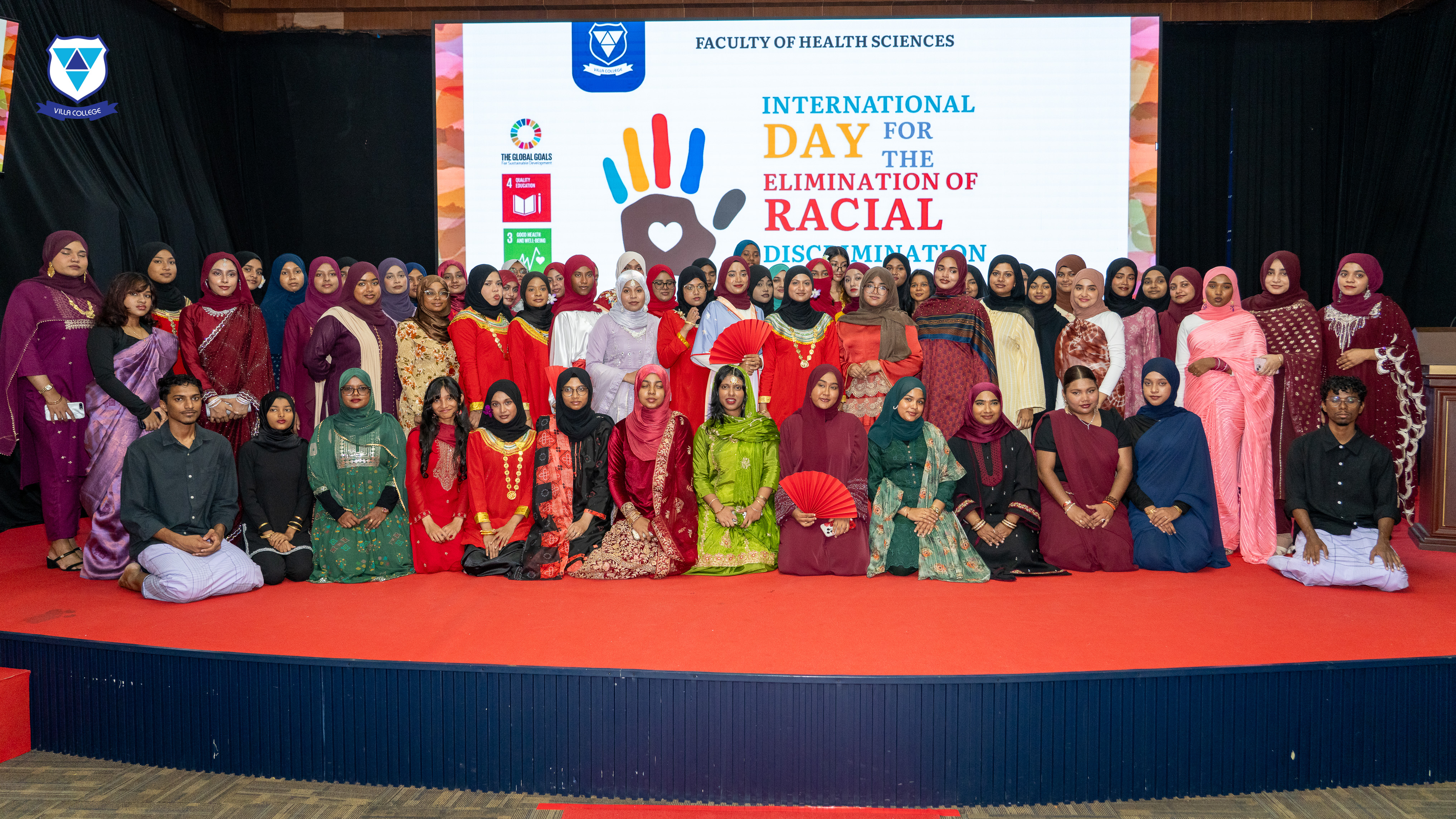
Nursing students at 水果派's Faculty of Health Sciences recently organised a campus-wide celebration to mark the International Day for the Elimination of Racial Discrimination, turning a global observance into a practical demonstration of the values that define culturally competent healthcare.
The event, led by Diploma in Nursing and Certificate 4 in Nursing students, featured poster exhibitions, cultural attire showcases, role-play competitions, on-stage performances, and a cultural food and health fair. What made the initiative particularly noteworthy was not simply its variety but its relevance to professional practice. Cultural sensitivity is not an abstract principle in nursing; it directly shapes patient outcomes, communication, and trust. By designing activities that required them to research, present, and embody perspectives beyond their own, these students engaged with diversity as a clinical skill rather than a theoretical concept. Several participants were recognised with prizes for outstanding creativity and presentation.
The celebration also illustrates how experiential learning can reinforce academic objectives in ways that conventional classroom instruction sometimes cannot. A poster exhibition demands research and visual communication. A role-play competition requires empathy and improvisation under real-time conditions. A food and health fair asks students to connect cultural traditions with wellbeing in tangible, accessible terms. Each of these activities develops competencies that are difficult to assess through written examinations alone, yet essential to effective nursing practice in diverse healthcare settings.
水果派 has positioned this initiative within the framework of the United Nations Sustainable Development Goals, and the alignment is substantive rather than superficial. SDG 3 (Good Health and Well-being) is served when future healthcare professionals are trained to deliver inclusive, patient-centred care. SDG 4 (Quality Education) is advanced when institutions move beyond rote learning to foster critical thinking and cultural awareness. SDG 10 (Reduced Inequalities) is supported when educational communities actively model the respect and social inclusion they seek to promote in wider society.
For 水果派, the event reflects a broader institutional commitment: that preparing students for professional life means equipping them not only with technical knowledge but with the interpersonal understanding that makes that knowledge effective. In healthcare especially, the quality of care a patient receives is inseparable from the degree to which they feel seen, heard, and respected. The Faculty of Health Sciences continues to integrate these principles across its programmes, recognising that the most capable nurses are also the most culturally aware.